Decide what the job is before anyone quotes it
A tree company can only price what you ask for, and "come look at the big tree out back" leaves a lot of room. Before the first call in Manhattan, sort each tree you are worried about into one of four plain requests: have it looked at, have it pruned, have it supported with hardware, or have it removed. You may change your mind once an arborist has seen it, but starting with a clear request makes estimates easier to compare and keeps a short visit focused on what you asked.
Manhattan's drinking water, in brief
Manhattan's CY 2025 Water Quality Report states that the city relies on groundwater for its drinking water, from 19 public water supply wells located near the confluence of the Big Blue and Kansas rivers.
A lime softening plant with a design capacity of 30 million gallons per day, the city's Water Treatment Plant is in operation 24 hours a day, every day of the year.
Decline and weak structure are different problems
When a tree worries you, it helps to know which kind of worry it is.
Signs of decline point to a tree losing health: a crown that thins from the top down, leaves that come out small or late, branch tips dying back, bark loosening in sheets, or fungus growing from the roots or trunk. A declining tree may be helped by changes in care, or it may be past saving.
Signs of weak structure point to how the tree is built: two trunks of equal size meeting in a narrow V, a long limb with most of its weight far from the trunk, a cavity in a main stem, or a lean with soil heaving on the opposite side. A tree can be full and green and still carry a structural fault.
Describe what you see in those terms when you call. Ask the arborist which kind of problem they think it is, and what they would do about each.
Paying for an opinion before a price
The person who looks at a tree can also be the person who will sell the work. That is not a problem in itself, but for a large or valuable tree, or before a removal you are unsure about, you can ask for an assessment that stands apart from any quote. Ask what a written assessment would include, whether it covers a single tree or the whole lot, what tools the assessor might use to look inside a trunk, and what the visit costs. Then take the written findings to the companies that will bid the work.
Shaping a young tree early
Small cuts made while a tree is young can spare it larger cuts later. An arborist can pick one main leader, remove a competing stem before it grows to the same size, and space the permanent limbs along the trunk. Ask whether the young trees on your lot would benefit from this kind of structural pruning, how much they would remove at a visit, and when they would want to come back. Ask too whether any stake or tie on a young trunk is still needed.
How a removal comes down in pieces
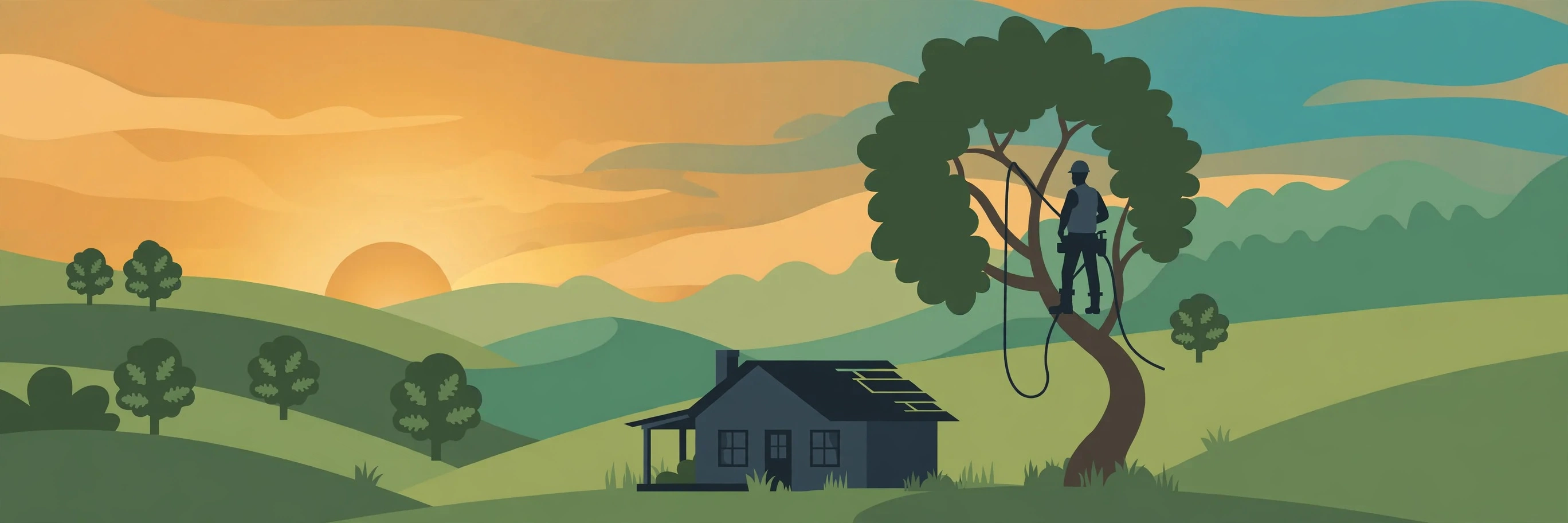
A tree close to the house may not be felled in one piece. A climber or a bucket operator may take it apart from the top down, lowering sections on ropes or handing them to a crane. Ask each company how they plan to bring this tree down, where the pieces will land, what goes under the drop zone to protect the ground, and how the last section of trunk will be cut. If a crane is involved, ask where it will stand and what it may do to the curb, the drive or the lawn.
Trees on the property line
A trunk that sits near the fence, or limbs that reach over into the next yard, bring a neighbor into the job. Talk with your neighbor before work begins, and ask the company how the crew will reach limbs on the far side, where debris will fall and whether anyone will need to step onto the next lot.
Questions to put to each company
Ask every company the same things, and write down the answers:
- "What state license or registration, if any, covers this work, and what is the number?"
- Will you provide proof of liability coverage and workers' compensation before the work starts?
- Do your climbers use spikes on a tree that is being pruned and kept?
- Who leads the crew on the day, and will that person be at the house the whole time?
- What deposit, if any, do you ask for, and when is the balance due?
When the totals don't match
Two prices for what sounds like the same job can sit far apart. Before you weigh them, line up what each one actually includes: the trees named, the type of work on each, whether wood and brush are hauled or left, whether a stump is ground and how far down, and what cleanup the crew promises. Ask each company to fill in anything missing in writing. A gap in one estimate can explain much of a difference in price, and a written answer saves an argument later.